Step 3: Multi-Vowel Syllables
Part A
Know the Spanish pronunciation of 6 out of 14 diphthongs (special vowel combinations) in order to correctly pronounce syllables containing I or Y in combination with other vowels, using proper nouns and cognates (words that are spelled similarly and mean the same in both languages).
Conectar: Here are words containing 6 of 14 Spanish diphthongs in which the diphthong is pronounced similarly to the English version of the word, (but be careful of how you pronounce the other letters)…
| AI = AY | EI = EY | OI = OY |
| UN boi-cot | ||
| IA = YA | IE = YE | IO = YO |
| UN Ma-te-rial San-tia-go, Bolivia | UN yoyo, Pa-tio UNA Ra-dio | |
| Cor-dial, Co-lo-nial, Ma-tri-mo-nial, Se-rial, Im-pe-rial, In-dus-trial, E-di-to-rial | Me-dio-cre |
Compare the pronunciation of the diphthongs in these names between English and Spanish:
| TAPIA, Ariana, A-dria-na, Dia-na, Vi-via-na, Va-le-ria, Na-ta-lia, A-me-lia, Ma-xi-mi-lia-no | DIEGO, Da-niel, Ga-briel | ||||||||||||
Part B
Know the Spanish pronunciation of all 14 diphthongs (special vowel combinations) in order to correctly pronounce syllables containing U in combination with other vowels, using proper nouns and cognates (words that are spelled similarly and mean the same in both languages).
Explorar: Practice pronouncing the following animal sounds in order to guess which animal makes each sounds.
| ¡Muu, Muu! | ¡Beee, beeee! | ¡Uuuu, uuuuuu! | ¡Cri, cri! |
| ¡Rrrrrr! | ¡Auú, auú! | ¡Guau, guau! | ¡Cuaa, cuaa! |
| ¡Pío, pío! | ¡Hiaa, hiaa! | ¡Quiquiriqui! | ? |
Practicar
WATCH an interactive mystery adventure as you travel through Spain with Mi Vida Loca (BBC) which uses an excellent method that starts out very basic and builds up over 23 episodes.
State Names
Here is more about the five state names in the United States of America that come from Spanish.
- “Colorado” is an adjective that means red-colored. How must the Spaniards have pronounced “Colorado” when they first saw and named the Colorado River in the sixteenth (XVI) century?
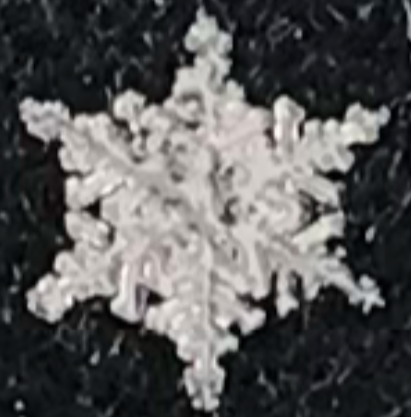
- “Nevada” is an adjective that means “snowy”. How must have the Spaniards pronounced “Nevada” when they named the Sierra Nevada in the sixteenth (XVI) century? Draw a snowflake over Nevada on the map.
- “Florida” is an adjective that means “flowery”. Notice what is illustrated on the emblem. How must have the Spaniards pronounced “Florida” when they named it after the day “Pascua Florida”, on April 2nd, 1513? Draw a flower over Florida on the map.
- How should “Montana” be pronounced in Spanish? “Montana” comes from the Spanish word “montaña”. Now, also practice correctly pronouncing “montaña”.
- “California” was named after the setting, Calafia, in a very popular 16th century Spanish novel.

Lesson 3 Summary
Pronunciation Organizer Example
The lyrics from “De America, yo soy” (From America, I am), a song by Los Tigres del Norte from Mexico, are organized into the following pronunciation charts which summarize the steps in the process of correct Spanish pronunciation.
3. WORDS CONTAINING DIPHTHONGS:
| A | E | O | ||||
| I / Y | IA = YA herencia, Colombia, Maya | AI = AY Mosaico, Maya, Paraguay, Uruguay | IE = YE Tierra, quieren | EI = EY | IO = YO bendición, canción, Yo, Dios, idioma | OI = OY soy |
| U / W | AU = AW Gaucho | UA = WA Guajiro, Ecuador, Paraguay, Uruguay, Guatemala | EU = EW Europa, Europeo | UE = WE pueblos, Venezuela | OU = OW | UO = WO |
| IU = YU | UI = UY | |||||
Directions
For this conversation we will use very limited Spanish to order something at a restaurant…
When you begin speaking to someone, start with a greeting:
¡HOLA!
Then continue with a sign of courtesy which at this point is limited to:
Perdón…
To ask if there exists a local cafe in the area, say:
¿Existe un café local en el área?
At the cafe, you might ask the following:
¿Existe un menú digital?
or …un patio exterior?
Although not as common, these might also relate to this experience:
¿El total?
or ¿Acepta un cheque personal?
| 1. “Existe…” (or “No existe…”) | (describe where the person, place or thing is) | |||||
| 2. article + noun (what you are looking for) | 3. adj. (describe more) | 4. prep. (conx) | 5. article + noun (what place you are looking for the noun) | 6. adjective (describe the place) | ||
| Un… | Una… | Original Natural Superior Popular Familiar Particular | …en… | Un… | Una… | Local Central Rural Regional Exterior Interior Tropical Global |
| Menú Patio Chocolate Taco Burrito Café Agua | Soda Pasta Tortilla | Café | ||||
Purchase
For this conversation we will use limited Spanish to purchase something…
When you begin speaking to someone, start with a greeting (saludo):
¡HOLA!
Then continue with a sign of courtesy (cortesía) which at this point is limited to:
Perdón…
Now you can ask what something is by saying:
¿Qué es?
However, since you may not recognize any time past 4:00, you need to ask what something means, so don’t forget:
¿Qué significa…?
Usually something can be cleared up in any situation just by pointing at the item being referenced (like the clock), but if you want to clarify whether it’s one thing or another, say:
¿Es… o…?
Express interest by simply exclaiming, “Interesting!”:
¡Interesante!
Ask how much it costs:
¿Cuánto es?
Point to what you want, and say:
Uno, por favor.
When you are ready to pay, say:
¿Cuánto es?
At any point during the conversation as an added courtesy, you can say thank you:
¡Gracias! —> ¡De nada!
In this case, “gracias” can also serve as your parting.
Introductions
Then, practice introducing yourself. For now, you can introduce yourself using:
SOY (I am) ____________ (your name) + plus words similar to English:
POR EJEMPLO, begin the conversation by expressing care for the other person:
“¡Hola!” (Hi!) “Perdón…” (Pardon)
When you are ready to introduce yourself, say:
“Mi nombre es _____.” (My name is _______.) or just “Soy ______.” (I am _____.)
It is important to be courteous and say:
“Un placer.” (as in “a pleasure to meet you”)
“Igualmente.” (Equally or “same here”)
“¡Adiós!” (Good-bye!)
…and possibly followed by:
**“¡Gracias!”** (Thank you!)
**“Gracia” means “grace” so technically “gracias” is like saying “graces”. This is a great example of the history of language!**

And you?
Another part of the verb phrase is the subject which causes the verb to appear in different forms. One form is called the third person which is what we have been looking at so far. One major difference between English and Spanish is the pronoun “Usted”.
- Depending on who you are speaking with and their customs (research this before you go somewhere), it may be necessary to address the second person (you) using the third person (Usted) to signify a more formal or respectful intention.
- This is only one of two possibilities for “you”.
When asking someone their name, we can ask:
“¿Cuál es el nombre de Usted?”
“Usted” as the formal “you” is used differently depending on custom. In general, use “usted” to be polite, especially if that person is older than you. Answer:
“Mi nombre es _______.
¿Y Usted?”
Now practice this with more nouns (like “the name”/ “el nombre”). For now, try to use as many names (proper nouns), like brands and words that are similar to English. You can add “favorit@” to ask about a favorite something!
ASK: “¿Cuál es __ _______ favorit@ de Usted?”
ANSWER: “Mi _____ favorit@ es __________. ¿Y Usted?”
| mi | es | (temas) | (colores) | ||
| el | tema, auto, gobierno, hábitat, animal, material, mineral, video, menú, perfume, color | favorito | capital, vídeos, música, animales, propaganda, combustión, religión, debate, gastronomía, medicina, administración, deportes | rojo, anaranjado, amarillo, verde, azul, morado, rosado, cafe, negro, blanco | |
| la | cosa, persona, ciudad, historia, música, región, profesión, industria | favorita |
Conversational Terms
The bolded terms in the following chart are among the most frequent terms in Spanish conversation, but not in texts. Here again you can draw a connection between the common words although they are not similar enough to be cognates.
| common | English | = | Spanish | common |
| please | FOR | FAVOR | POR | por favor |
| PARDON | PERDÓN | |||
| (to meet you) | A PLEASURE | UN PLACER | (conocerle) | |
| HELLO | HOLA | |||
| Thank you | GRACES | GRACIAS | ||
| same to you | EQUALLY | IGUALMENTE | ||
| good-bye | adiós | |||
Organize simple noun phrases in order to communicate what “there is (not)” and what “it is (not)” using “(no) hay” and “(no) es”.
Although the Spanish word “existe” is among the most common words in Spanish, it is not nearly as common as “hay” which means “there is” or “there are”. I would recommend using “existe” in speaking Spanish when you can’t remember “hay”, but the person you are speaking with may very well answer using “hay” so it is good to start paying attention to this now.
| English | QUESTION | — | ANSWER | English |
| Does it exist? | ¿Existe? | → | Existe. | It exists. |
| Does Santiago exist? | ¿Existe Santiago? | → | Existe Santiago. | Santiago exists. |
| Is there? | ¿Hay? | → | Hay. | There is. |
| ¿Qué hay? (What is there?) No hay nada. (There is nothing.) Sólo hay uno. (There’s only one.) No hay mucho. (There isn’t much.) Hay mucho. (There’s a lot.) Hay de todo. (There’s a bit of everything.) todo <–> total Hay un punto. (There’s a point/ dot.) No hay problema. (There’s no problem.) No hay forma/ manera. (There’s no way.) |


From
In Spanish, “de” means “of” and is used the same as “of” in English. It is important to get used to the following format, in place of “apostrophe + S” denoting belonging:
“______’s _____”
“the ____ of _____”
“el/ la _____ de ______”
We can show belonging by using “of” or “from” (which can also be a contraction with the masculine “the”).
Es el momento de la persona. or Es la parte del problema.
Yes, “es de” means “(it belongs) to”, but in Spanish it has two English equivalents:
“es de” = “is of” & “is from”
So when we talk about where someone is from, we also use “es de”. Practice pronunciation with each letter of the Spanish alphabet as you discuss where each of the following persons is from…
| A | Antonio es de Argentina. | N | Natalia es de Nicaragua. |
| B | Blanca es de Bolivia. | Ñ | Muñoz es de España. |
| C | Cecilia es de Cáceres. | O | Olivia es de Oviedo. |
| Ch | Chimi es de Chile. | P | Pablo es de Panamá. |
| D | Dolores es de Durango. | Q | Raquel es de Quito. |
| E | Elena es de Ecuador. | R | Clara es de Perú. |
| F | Felipe es de Florida. | rr | Rosa es de Monterrey. |
| G | Gloria es de Guatemala. | S | Sara es de San Juan. |
| H | Héctor es de Honduras. | T | Tomás es de Toledo. |
| I | Inés es de Ibiza. | U | Uriel es de Uruguay. |
| J | José es de Jalisco. | V | Víctor es de Venezuela. |
| K | Katrina es de Kansas. | W | Oswaldo es de Washington. |
| L | Luis es de Lima. | X | Félix es de Extremadura. |
| Ll | Guillermina es de Sevilla. | Y | Yuri es de Yucatán. |
| M | Manuel es de México. | Z | Zahir es de Zaragoza. |
Gramática Parte 4
What is
- The pronoun “Usted” means “you”. It doesn’t need an article. In this example “No es” means “It (She) isn’t”.
| N | VERB | PRO-/ PROPER- NOUNS |
| ¿Es | Usted? | |
| No | es | María. |
| Es | El Salvador. |
- “¿Cuál?” means “Which?” or “What?”. “Es” means “is” or “are” and only implies the third person singular which can be “it”, “he”, “she”, or “usted” (formal you).
| QUESTION | ANSWER |
| ¿Cuál es? | Es… |
- The preposition (P) “de” can be used to make nouns function as adjectives. This example means “it is not” (“no es”).
| N | VERB | ART/ ADJ | NOUN | P | ART/ ADJ | NOUN | |
| No | es | la | idea | de | la | persona. | |
- When you want to indicate belonging you can use the preposition (P) “de” which means “of”. This is how “apostrophe s” is expressed in Spanish.
| N | VERB | ART/ ADJ | NOUN | P | ART/ ADJ | NOUN | |
| ¿No | es | el | nombre | de | → | Usted? | |
| Es | un | error | del | sistema. | |||
- When you want to talk about something or someone being “from”, you also use “de”…
| N | VERB | P | ART/ ADJ | NOUN | ADJECTIVE | P |
| No | es | de | → | Perú. | ←—————————————- | |
| Es | de | la | República | Dominicana | en | |
| ———–> | el | Caribe. | ←—————————————- | |||
Progress Check
Complete Progress check 3 and check your answers.
More about Time
Now you can practice the numbers 2-12 to express more hours.
“¿Qué hora es?” = “What hour is it?” (“What time is it?”)
To which we answer:
Son las dos.
Practice saying the question (¿Qué hora es?) and answer (Son las ___.) with all of the numbers 1-12…
Son las…
…dos, tres, cuatro, cinco, seis, siete, ocho, nueve, diez, once, doce…
…en _________.
Cantidades
Map familiar nouns in your community. Write the following numeric statements on a map using:
“HAY…” or “No hay…” + (indefinite or exact number) + (singular or plural noun) + en
| números | Sentence 1 = “Hay”+ indefinite number + noun (see examples) | |
| indefinidos | exactos | Sentence 2 = “Hay”+ exact number + noun (see examples) |
| no hay | cero (0) | puntos en un círculo |
| un | uno (1) de l@s | estado(s), objeto(s), humano(s), individuo(s), universo(s) |
| una | idea(s), persona(s), roca(s), nación(es), cuestión(es) | |
| un par de | Dos (2) | géneros (masculino y feminino)números (singular y plural) |
| unos unas | Tres (3) | dimensiones (horizontal, vertical, y profundidad)tipos de verbos (-ar, -er, -ir)puntos en un triángulo |
| Cuatro (4) | opciones terminales en el sujeto (-o, -a, -os, -as)puntos en un rectángulo | |
varios varias | Cinco (5) | vocales (a, e, i, o, u), océanos (Ártico, Atlântico, Pacifico, Índico, Antártico),puntos en una estrella (o un pentágono) |
| Seis (6) | personas y opciones terminales en los verbos (3 personas x plural y singular),puntos en un copo de nieve lados en un cubo | |
| Siete (7) | días de la semana, continentes | |
| Ocho (8) | horas laborales en un día | |
| Nueve (9) | espacios en # (“gato” o “tres en raya”) | |
| Diez (10) | dígitos (o dedos) | |
| docenas de, muchos,muchas | Once, doce, trece, catorce, quince, dieci- (-seis, siete, ocho, nueve) | seis por diez minutos en una hora (segundos en un minuto)animales en todos los continentes y océanospíxeles en un televisor, una computadora, o un teléfono |
| una cantidad enorme de/ un número infinito de | factores primos y múltiplosrocasátomos | |
Ser
😂 “What if soy milk is actually regular milk introducing itself in Spanish?” 🤣
When you introduce yourself, say:
“Mi nombre es _____.” (My name is _______.)
or just
SOY (I am) ____________ (your name).
SOY:
- estudiante de español.
- ______________ profesional.
- humano.
- buena persona.
- inteligente.
SOMOS:
- estudiantes de español.
SON:
- las dos de la tarde.
- españoles.
Atlas Cultural
First, practice saying and identifying the geographical names:
“ _______ es de _________.” (challenge term is from country.)
Listen to the song: “De América, Yo Soy” (From America, I am) by Los Tigres Del Norte.
 World Literate Now!